


 Help Center

 My Account
 Orders
 Wishlist
  Address

 October 13, 2026
Wood Burning Fireplace: A Practical Guide to Real Fire at Home
There is a particular kind of quiet that settles over a room when real logs start to crackle behind glass. The orange glow, the faint smell of wood, the warmth you feel on your face before the rest of the room catches up. A wood burning fireplace gives you something no switch or remote ever quite does: actual fire, doing the work it has done in homes for centuries.
But a real fire also asks more of you. It needs a flue, a safe base, dry fuel and a little routine. This guide walks through how a modern wood burning fireplace works, which design suits which room, what to check before you buy, and how to live with one comfortably, using the cast iron models in our wood fireplaces collection as real examples.
Key Takeaways
- A freestanding wood burning fireplace (often called a wood stove) burns logs or charcoal inside a closed cast iron firebox with a glass door, which is safer and more efficient than an open hearth.
- It always needs a flue pipe that vents smoke outdoors, a non-combustible floor beneath it and clear space around it.
- Heat output matters: our models range from approx. 10 kW to approx. 16 kW, so match the unit to your room size.
- Dry, seasoned wood burns hotter and cleaner, and leaves less soot on the glass and in the chimney.
- If you only want the look of flames, an electric or water vapor fireplace may suit you better.
What Is a Wood Burning Fireplace, Exactly?
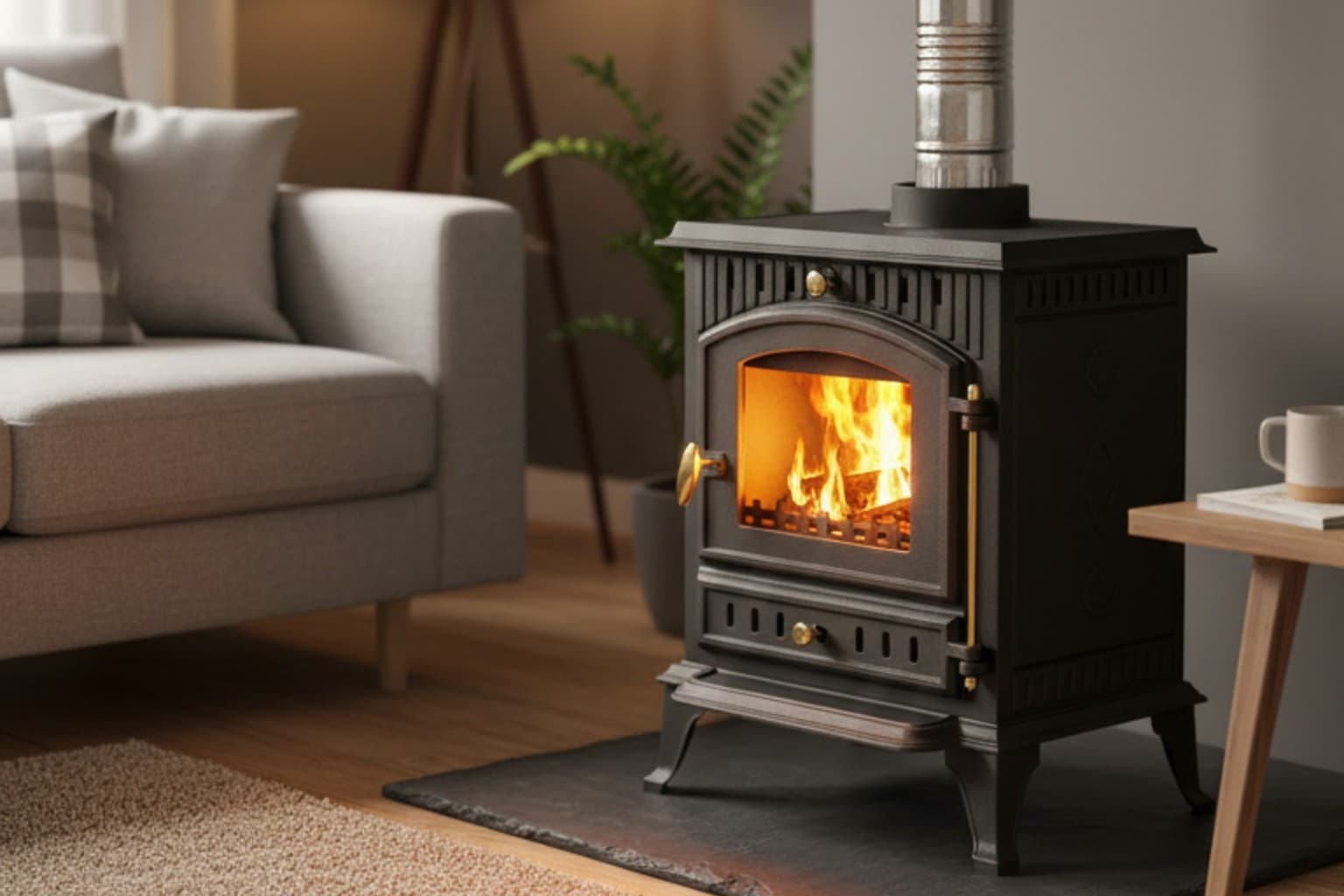
When most people picture a fireplace, they imagine an open brick opening in a wall. That is one kind. The kind most homes install today is a freestanding wood burning fireplace: a solid metal box on legs with a door at the front and a pipe rising from the top or back.
Here is how it works, in simple terms:
- You load wood (or charcoal) into the firebox and light it.
- The glass door stays closed while the fire burns, so sparks and embers stay inside and you can still watch the flames.
- Smoke and gases rise out through the flue or chimney pipe and leave the house.
- The heavy metal body soaks up heat and radiates it into the room, and keeps radiating for a while after the flames die down.
- Ash falls through a grate into an ash tray that you slide out and empty.
That closed design is the big difference from an open fireplace. Less warm air escapes up the chimney, the fire is easier to control, and the room stays cleaner.
Why People Still Choose Real Fire
With so many electric options around, why would anyone pick a fireplace that needs logs? A few honest reasons:
The Experience Is Real
The sound of wood shifting, the changing shape of the flames, the warmth that seems to sink into you. Even the best flame effects are imitating this. For many families, especially those in cooler regions or with a farmhouse, cottage or hill home, that authenticity is the whole point.
It Heats Without Electricity
A wood burning fireplace does not need a socket to keep you warm. In places where winter power cuts are common, that independence is genuinely useful.
It Becomes the Heart of the Room
A black cast iron stove with a glowing window is a strong visual anchor. Chairs naturally turn towards it. Evenings start to happen around it.
View Product: Real Wood Burning Fireplace, with Glass Door and Ash Tray
Choosing the Right Wood Burning Fireplace for Your Space
Not every model suits every room. These are the points worth checking before anything else.
Heat Output vs Room Size
Heat output is listed in kilowatts (kW). A bigger number means more heat, and more is not always better. An oversized unit in a small room can make it uncomfortably hot, and you end up burning it low and smoky.
- Approx. 10 kW models in our range are listed for small to medium-sized rooms.
- Approx. 16 kW models put out noticeably more heat, which helps in rooms that are draughty, have high ceilings or lose warmth quickly.
If you are unsure, tell us the size of your room and how it is insulated, and we can help you narrow it down.
Material and Build
Cast iron is the classic choice because it is heavy, holds heat well and handles years of high temperatures. Our Real Wood Burning Fireplace with Glass Door and Ash Tray (model RWB-192516-C7), for instance, is listed as heavy-duty cast iron, measures 19 × 25 × 16 inches (L × H × D) and weighs 76 kg. That weight is a good sign of solid construction, and also a reminder that your floor needs to carry it.
Flue Position: Top or Back
Most stoves vent from the top, with a vertical pipe running up and out through the roof or a wall. Some vent from the back, which can make routing easier when the stove sits against an outside wall. Our Real Wood Burning Fireplace with Flat Top and Backside Exhaust Vent uses a 5-inch rear vent pipe and is listed for indoor and outdoor use.
Always check the outlet diameter too. Our models list 5.0-inch or 6.0-inch smoke outlets, and your flue pipe must match.
Shape and Style
The design of the top changes the whole look:
- Flat top: clean and modern, with a usable surface for warming a kettle or placing a decor piece (once you understand how hot it gets).
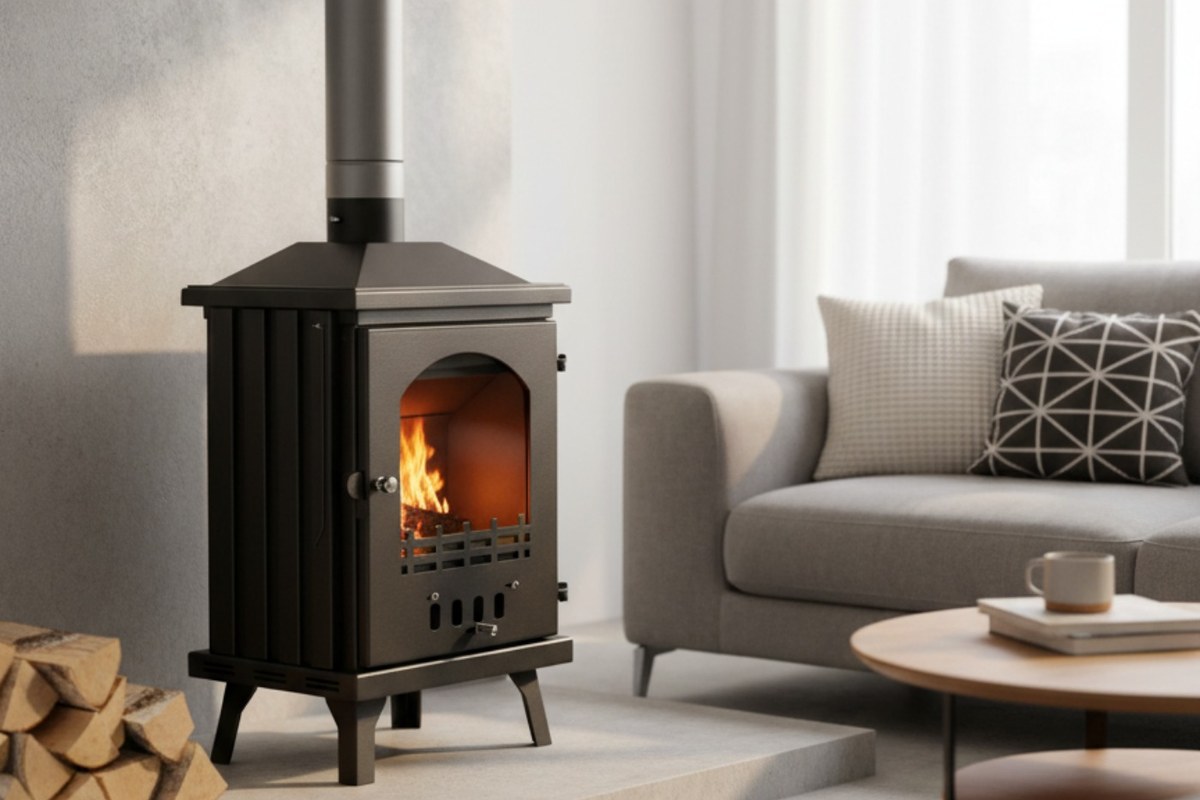
- Taper top: a slightly sculpted, roof-like crown that feels more traditional.
- Arched glass door: frames the flames like a small window, which suits classic and rustic interiors.
View Product: Real Wood Burning Fireplace with Taper Top, with Glass Door and Ash Tray
Installation Basics You Should Not Skip
This is where a wood burning fireplace differs most from a plug-in unit. Plan the installation before the stove arrives.
- Plan the flue route. Smoke has to leave the house through a properly sealed pipe that ends outdoors, clear of windows, balconies and neighbouring openings. A good draft keeps smoke going up rather than into the room.
- Use a non-combustible base. Stand the stove on stone, tile, slate or a similar hearth pad, never directly on wood flooring or carpet. Our product care notes ask for placement on a non-flammable surface.
- Keep clearance. Leave generous space between the stove, its pipe and anything that can burn: curtains, furniture, wooden panelling, shelves.
- Ventilate the room. A fire needs air to burn properly. Do not install one in a sealed room with no fresh air supply.
- Get professional help. A qualified installer can check your roof or wall, pipe joints and local building requirements.
A carbon monoxide alarm near the fireplace is a small, sensible addition for any home that burns fuel indoors.
Suggested Blog - Choosing Between Electric and Wood Fireplaces for Home Decor Purposes
Burning Wood the Right Way
How you burn matters as much as what you buy. A few habits make a big difference to heat, smoke and cleaning.
- Use dry, seasoned wood. Freshly cut wood is full of water. It hisses, smokes and leaves tar in the flue. The EPA's Burn Wise guidance recommends wood that has been split and dried properly before burning.
- Never burn rubbish. Plastic, painted or treated wood, glossy paper and packaging release harmful fumes.
- Start small. Light kindling first, then add larger logs once the fire is established.
- Do not overload. A firebox stuffed to the door can overheat the stove.
- Charcoal works too. Our cast iron models are listed for wood or charcoal, which gives you flexibility depending on what is available locally.
Where a Wood Burning Fireplace Works Best
The Living Room
The natural home for a stove. Place it where the flue can run cleanly, then arrange seating in a loose arc around it. A rug in front (kept a safe distance away) and a log basket at the side complete the look.
Hill Homes, Farmhouses and Cottages
Cooler climates are where a real fire earns its keep. Wood is often easy to source, winters are longer, and the rustic character of cast iron fits stone walls and timber ceilings beautifully.
Covered Outdoor Spaces
Some models, such as the backside exhaust version, are listed for indoor and outdoor use. A covered verandah or patio with a stove becomes a winter gathering spot. For open balconies and small yards, our Fire Tube Real Wood Heater, made from SS304 stainless steel with a vertical glass flame tube, is another option designed for outdoor settings.
View Product: Real Wood Burning Fireplace with Flat Top, Backside Exhaust Vent, With Glass Door
Styling Tips for Your Fireplace Corner
- Let it stand out. Matt black cast iron looks striking against a light wall, exposed brick or a textured plaster finish.
- Frame it with stone. A slate or stone hearth pad is safe and looks deliberate rather than practical.
- Stack logs as decor. A neat log stack or metal log holder adds texture, but keep it well away from the stove body.
- Keep the palette warm. Wood tones, wool throws, linen cushions and soft lamps echo the warmth of the fire.
- Do not crowd it. Leave the space around the stove open. It looks better and it is safer.
Care and Maintenance
A cast iron wood burning fireplace is simple to look after if you build a few habits:
- Empty the ash tray regularly, once the ash is completely cold.
- Wipe the glass with a cleaner suitable for heat-resistant glass when the stove is cool.
- Check door seals and the firebox for wear from time to time.
- Inspect the flue. Soot and creosote build up inside chimneys over time. The Chimney Safety Institute of America recommends having chimneys inspected at least once a year.
Our cast iron wood fireplaces carry a 5-year warranty, as listed on each product page.
Suggested Blog - Fireplace Ideas for Indian Homes
Is a Wood Burning Fireplace Right for You?
It is worth being honest here. A real fire is wonderful, but it is not for every home.
A wood burning fireplace is a great fit if:
- You have a way to run a flue safely to the outside.
- You live somewhere with real winters, and you want serious heat.
- You can source and store dry wood or charcoal.
- You enjoy the ritual of building and tending a fire.
You may be happier with an electric or water vapor model if you live in a sealed apartment with no flue option, you want flames in a warm climate without heat, or you simply want warmth at the press of a button.
Suggested Blog - Electric Fireplace for Home: A Practical Buying and Styling Guide
Final Thoughts
A wood burning fireplace brings something rare into a modern home: real fire, real warmth and a reason to slow down in the evening. Choose the right heat output for your room, plan the flue and hearth properly, burn dry wood, and it will reward you for many winters.
Explore our wood fireplaces collection to compare cast iron models, flat and taper tops, and top or rear exhaust designs, and reach out to our team if you would like help choosing the right one for your space.
About the Author
The India Decor Team curates fireplaces, fire pits, mantels and home decor for modern homes, and writes practical guides to help you choose, style and care for the pieces you bring home.