


 Help Center


 My Account
 Orders
 Wishlist
 Address


 October 21, 2026
Sikh Wall Art: Guru Nanak Dev Ji and Khanda Metal Decor for Home
My neighbour's father used to sit in the same chair every morning, a steel glass of tea in one hand, softly reciting Japji Sahib before anyone else in the house was awake. When the family moved into a new flat last year, the first thing his son put up, before the curtains and before the TV, was a black metal portrait of Guru Nanak Dev Ji on the wall facing that chair. "Now it feels like home," the old man said. That one line has stayed with me.
That is the real job of Sikh wall art. It is not about filling a blank wall. It is about bringing a sense of faith, gratitude and belonging into the rooms where your family actually lives. A laser-cut steel piece does that with quiet dignity: no glass to break, no frame to fade, just a clean silhouette that catches the light and throws a soft shadow. In this guide I'll walk you through the Sikh designs in our Spiritual Wall Art collection, where they look best, how to pick the right size and how to display them with the respect they deserve.
Whether you are setting up a small prayer corner, giving your living room a meaningful centrepiece or looking for a Gurpurab gift for someone you love, there is a piece here for you.
Key Takeaways
1. Two Sikh designs: Our collection has a detailed Guru Nanak Dev Ji Metal Wall Art piece showing the Guru seated with his hand raised in blessing, and a bold Khanda (Sikh Symbol) Metal Wall Art piece.
2. Solid steel, matte finish: According to the product listings, both are laser-cut from 2 mm thick steel with a textured, dyed and powder-coated matte finish.
3. A floating 3D look: Elevation screws hold each piece about 1 cm (0.4 inches) away from the wall, so it casts a gentle shadow and looks more like sculpture than a print.
4. Sizes for every wall: The Guru Nanak Dev Ji piece comes in portrait sizes from 12 × 18 to 28 × 34 inches, and the Khanda comes in square sizes from 18 × 18 to 32 × 32 inches.
5. Display with respect: Choose a clean, well-lit wall at or above eye level, away from shoes, bathrooms and clutter, and the art will feel right in any room.
Why Sikh Wall Art Means So Much at Home
For many Sikh families, the home is an extension of the gurdwara. It is where Gurbani is recited, where langar-style sharing happens around the dining table and where children first hear the sakhis of the Gurus. Sikh wall art makes that spirit visible. A portrait of Guru Nanak Dev Ji is a daily reminder of his message of one God, honest work, sharing with others and treating everyone as equal. The Khanda, meanwhile, is the emblem of the Khalsa and a symbol of faith, courage and service.
Guru Nanak Dev Ji, the founder of Sikhism and the first of the ten Sikh Gurus, was born in 1469 in Talwandi, now known as Nankana Sahib. If you would like to read more about the faith's history and beliefs, the BBC's introduction to Sikhism is a clear and respectful place to start.
What makes these images work so well as decor is their simplicity. A strong, recognisable outline reads clearly from across a room, whether it is a living room in Ludhiana, a flat in Mumbai or a family home in Toronto. And because they are cut from metal, they feel permanent, which suits something this meaningful.
The Sikh Wall Art Designs in Our Collection
1. Guru Nanak Dev Ji Metal Wall Art
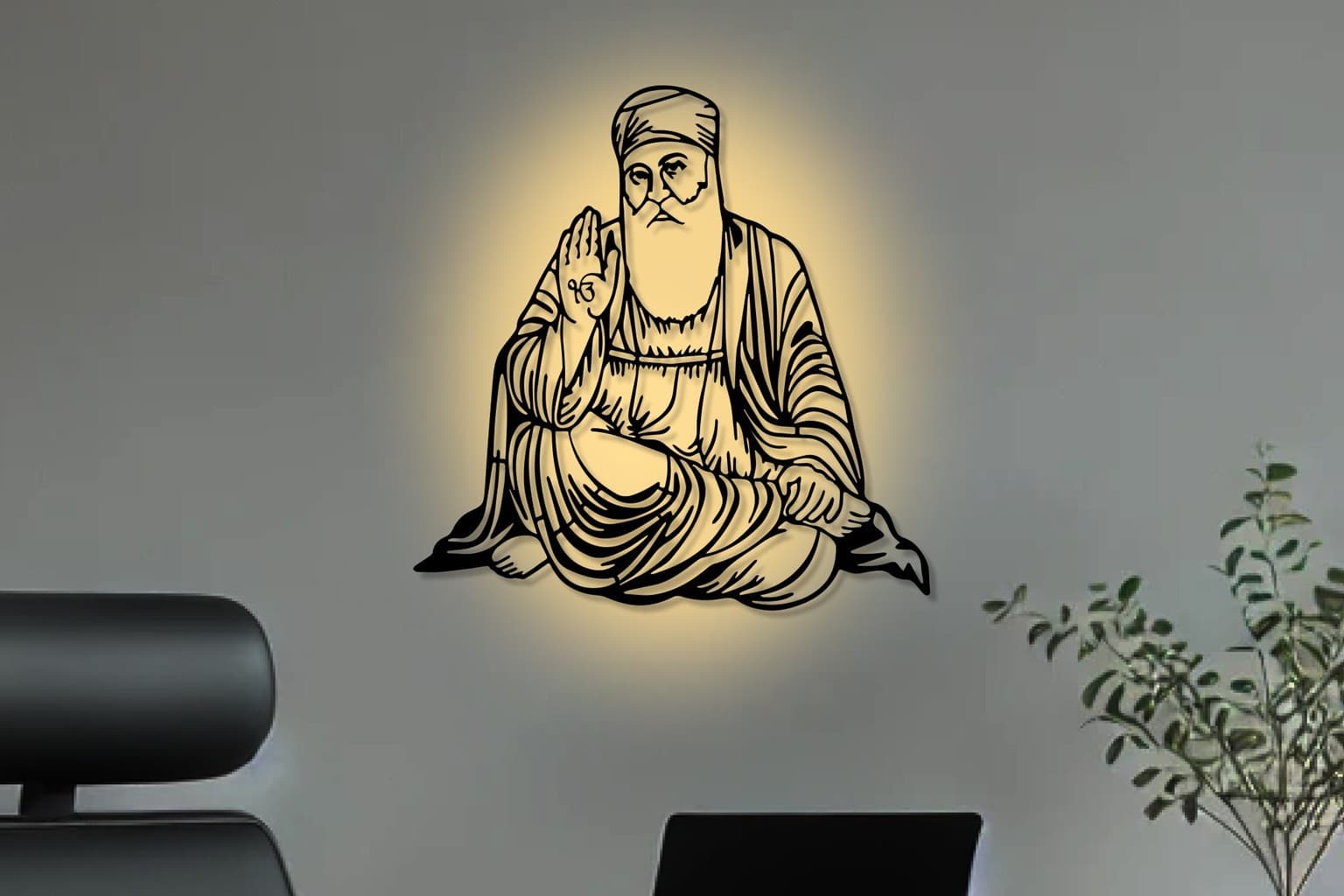
This is the piece people stop and look at. Guru Nanak Dev Ji is shown seated cross-legged, wrapped in flowing robes, with a long beard, a gentle expression and his right hand raised in blessing. The laser cutting picks out every fold of the cloth and every line of the turban, so the figure has real depth even though it is a flat sheet of steel.
It is a portrait-shaped design, which makes it a natural fit for narrower walls, the space between two windows or above a slim console. With warm light behind or above it, the black outline glows beautifully against a plain wall. The listing describes it as ideal for living rooms, prayer rooms and spaces that celebrate Sikhism and spirituality.
View Product: Guru Nanak Dev Ji Metal Wall Art | Sikhism Wall Frame
2. Khanda (Sikh Symbol) Metal Wall Art
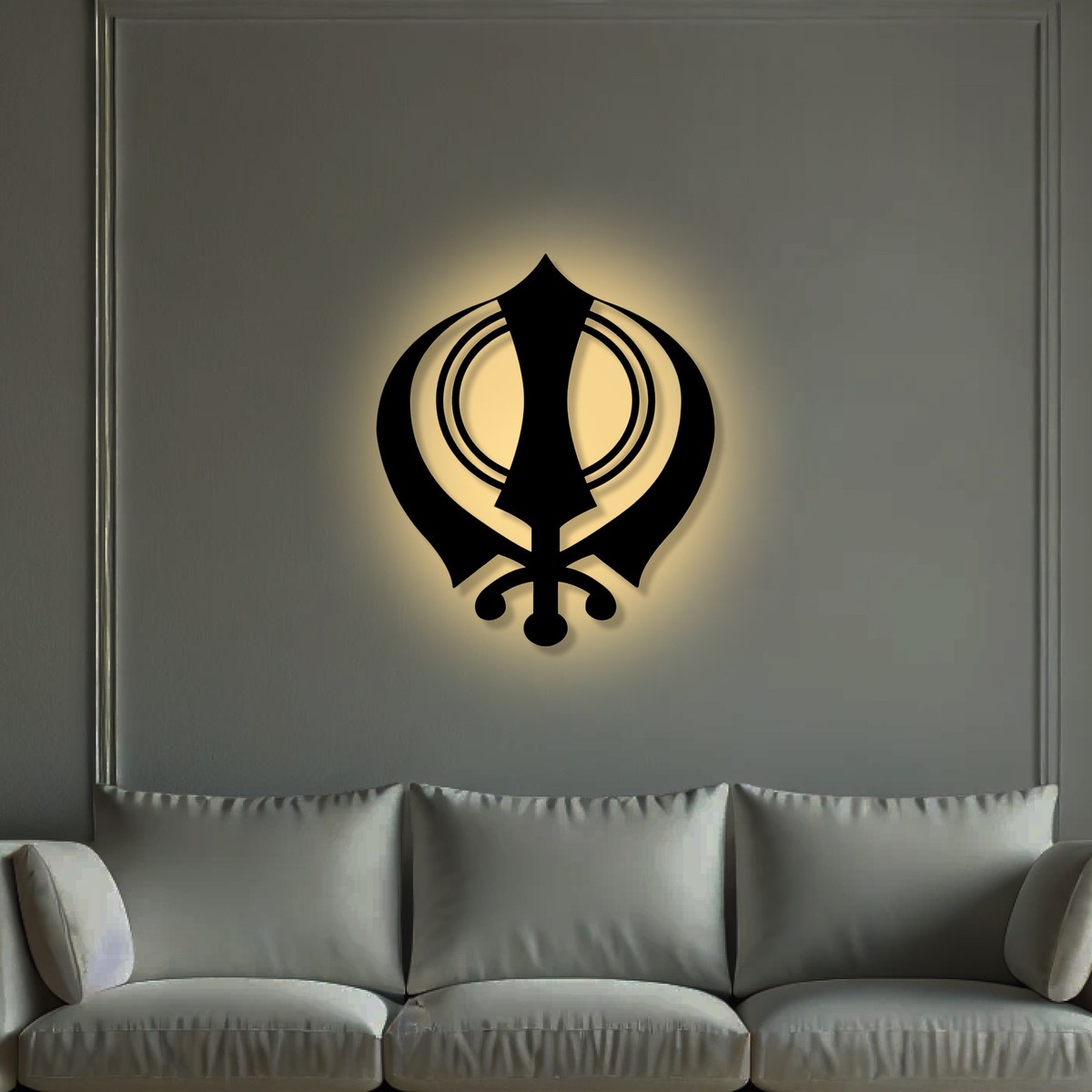
If you prefer something more graphic and modern, the Khanda is a striking choice. The design has the double-edged khanda at the centre, the circular chakkar around it and the two curved kirpans on either side, which are often explained as miri and piri, the worldly and the spiritual. In solid matte black, it is bold, balanced and instantly recognisable.
Because it is a square, symmetrical shape, the Khanda looks wonderful centred above a sofa, a bed or a puja cabinet. It also works in more contemporary interiors where a detailed portrait might feel too busy. The listing describes it as a symbol of the strength, unity and spiritual essence of the Sikh faith.
View Product: Khanda (Sikh Symbol) Metal Wall Art | Divine Sikh Heritage Decor
Where to Hang Sikh Wall Art at Home
Living Room
The living room is where guests arrive and where the family gathers, so it is the most natural home for a Guru Nanak Dev Ji portrait or a Khanda. Centre it above the sofa or on the main wall you see as you walk in. Keep the wall around it fairly clear so the piece has room to breathe.
Prayer Room or Path Corner
If you have a dedicated space for Gurbani, Sukhmani Sahib or quiet reflection, a metal piece on the wall gives that corner a focal point without crowding the shelf below. Many families like the portrait here, at or slightly above eye level when seated, with soft lighting and a simple rumala-covered table or a small rack for gutkas.
Entrance and Foyer
The Khanda is a lovely piece to greet people at the door. It tells every visitor something about your family before a word is spoken. Place it on the wall facing the entrance rather than right beside the shoe rack.
Home Office or Study
Working from home can make the day blur together. A Guru Nanak Dev Ji portrait opposite your desk, or behind you on video calls, adds calm and a bit of perspective when the inbox gets heavy. It is also a beautiful presence in a child's study corner.
Bedroom
Some families prefer to keep religious images in common spaces, while others like waking up to them. If you choose the bedroom, the wall above the headboard or the wall facing the bed works well. Go with whatever feels respectful to you and your elders.
How to Choose the Right Size
Start by measuring the furniture or the empty space under where the art will go. A simple rule is that wall art above a sofa or bed should be roughly half to two-thirds the width of that furniture. For a standalone wall, leave at least a hand's width or more of clear space on all sides.
For the Guru Nanak Dev Ji Metal Wall Art, the listed sizes are 12 × 18, 18 × 24, 24 × 30 and 28 × 34 inches (width × height). The smaller sizes suit prayer corners, study desks and narrow walls. The larger sizes make a real statement above a three-seater sofa or in a double-height foyer.
For the Khanda (Sikh Symbol) Metal Wall Art, the listed sizes are 18 × 18, 22 × 22, 26 × 26 and 32 × 32 inches. An 18- or 22-inch Khanda is perfect for an entrance or puja cabinet, while 26 or 32 inches holds its own above a sofa or bed. Both listings also mention that customisation is available.
Not sure? Cut a sheet of newspaper to the size you are considering and tape it to the wall for a day. You will know quickly whether it feels too small, too big or just right.
Displaying Sikh Wall Art with Respect
Because these designs carry deep religious meaning, a little thought about placement goes a long way. These are simple, common-sense guidelines that most families follow:
Keep it clean and elevated. Hang the art at or above eye level, never low on a wall where it could be brushed by feet or furniture.
Choose the right room. Avoid bathrooms, the wall directly above a shoe rack and spaces where the art might feel out of place.
Give it space. Do not crowd the piece with posters, clocks or random frames. A single portrait or Khanda on a calm wall feels more reverent than a busy gallery wall.
Light it gently. A warm wall washer, a cove light or a small spotlight brings out the 3D shadow beautifully, especially in the evening.
If you are curious about the meaning behind other spiritual designs, you might enjoy this:
Suggested Blog - Spiritual Wall Art: Laser-Cut Metal Decor for Calm Homes
Styling Ideas for Sikh Wall Art
Matte black steel is wonderfully versatile, so you do not need to redecorate around it. A few ideas that work in most Indian homes:
Warm neutral walls. Off-white, beige, soft grey or a warm sand colour make the black silhouette stand out without looking harsh.
Wood and brass. A teak console, a wooden slat panel or a few brass diyas beneath the art create a warm, traditional feel that suits both pieces.
A touch of green. A tall plant or a small money plant on a side table softens the hard lines of the metal and keeps the corner feeling alive.
Pair thoughtfully. If you want more than one piece, a Guru Nanak Dev Ji portrait in one room and a Khanda in another often looks better than squeezing both onto the same wall.
What Makes Good Sikh Metal Wall Art
Precise Cutting
With a portrait like Guru Nanak Dev Ji, the expression, the beard and the folds of the robe are what make the image feel right. Clean laser cutting keeps those lines sharp and true, so the face reads with warmth rather than looking crude.
Proper Thickness
Both designs are listed as 2 mm thick steel. That thickness helps larger sizes stay flat and solid on the wall instead of bending or rippling over time.
A Durable Finish
The textured, dyed and powder-coated matte finish gives the steel a soft, non-reflective look and protects it from everyday wear. It also hides fingerprints far better than a glossy surface.
Depth on the Wall
The elevation screws that hold each piece about 1 cm off the wall create a shadow that shifts through the day as the light changes. It is a small detail, but it is what makes metal wall art feel alive.
Installation and Care
Installing your Sikh wall art is straightforward. Mark the position with a pencil, check it with a spirit level, drill for the elevation screws using suitable wall plugs and mount the piece. For the larger sizes, ask someone to hold it level while you fix it in place.
Care is just as simple. Wipe it with a soft, dry cloth every week or two. Avoid harsh chemicals and scrubbing pads, which can damage the matte finish, and keep it a safe distance from diyas, candles and incense. For a fuller routine, read our guide on how to maintain and clean metal wall art. The listings recommend indoor use to keep the finish looking its best.
Sikh Wall Art as a Gift
Few gifts feel as personal as a piece of faith for someone's home. A Guru Nanak Dev Ji portrait or a Khanda is a heartfelt choice for Guru Nanak Gurpurab, Vaisakhi, a housewarming, a wedding, or for grandparents who would love something meaningful on their wall. It also makes a thoughtful present for friends abroad who miss a bit of Punjab at home. For more gifting inspiration, take a look at our guide to metal wall art gifts for Diwali and housewarmings.
Final Thoughts
The best Sikh wall art does not compete with your home. It anchors it. A Guru Nanak Dev Ji portrait brings warmth and a gentle reminder of the Guru's teachings, while the Khanda brings strength, pride and a clean, modern presence. Both are cut from solid steel, finished to last and designed to look beautiful for years.
Choose the wall your family sees most, measure it, pick a size that feels generous and keep the space around it calm and clean. Then explore the full Spiritual Wall Art collection at The India Decor and bring a little of that peace home.
About the Author
The India Decor Team curates metal wall art, fireplaces and home decor for modern homes and workspaces, and writes practical guides to help you choose, style and care for the pieces you bring home.